
How Can the Right Cleaners and Coatings Improve Commercial Kitchen Hygiene?
Commercial kitchens face constant contamination from grease, moisture, and high-traffic use. Using professional degreasers, grease-stripping cleaners, all-purpose sanitation solutions, and non-slip floor coatings improves hygiene, reduces slip hazards, shortens cleaning time, and supports regulatory compliance—making kitchens safer, cleaner, and more operationally efficient.
The Commercial Kitchen Reality: Where Clean Is Never Clean Enough

A commercial kitchen is not just a workplace—it’s a controlled-risk environment. Grease aerosolizes. Floors sweat. Equipment radiates heat and moisture. Staff move fast, corners get cut, and inspectors do not care how busy you were.
Facility managers in hospitality are tasked with solving three persistent problems at once:
- Grease accumulation on floors, walls, vents, and equipment
- Slip-and-fall risk from oil, moisture, and detergents
- Relentless cleaning cycles that consume labor, time, and chemicals
The wrong products make all three worse. The right system turns kitchens into safer, more manageable spaces.
This is where Perma’s cleaners and coatings function as infrastructure—not just supplies.
Grease: The Silent System Failure in Foodservice Facilities
Grease isn’t just messy. It’s chemically stubborn.
As oils heat and cool repeatedly, they polymerize—forming sticky, hydrophobic films that standard cleaners cannot fully remove. Over time, this leads to:
- Biofilm formation that harbors bacteria
- Reduced surface traction on floors
- Persistent odors embedded in grout and porous materials
- Increased fire load in vents and hood systems
Cosmetic cleaning leaves risk behind. Functional cleaning removes it.
How Perma Degreasers Solve the Root Problem
Perma’s professional degreasers are formulated to break grease at the molecular level, not just smear it thinner.
What makes them different:
- Emulsification that lifts and suspends oils for full removal
- Compatibility with foodservice surfaces (tile, concrete, stainless, sealed floors)
- Reduced need for repeated scrubbing cycles
- Faster dwell times, lowering labor exposure
For facility managers, this translates to:
- Shorter cleaning windows
- Lower chemical consumption
- Consistent results across shifts and staff skill levels
Clean once. Clean correctly. Move on.
Also Read 💦How Can Hospitality Facilities Prevent Slip-and-Fall Accidents?
All-Purpose Cleaners That Actually Belong in Kitchens
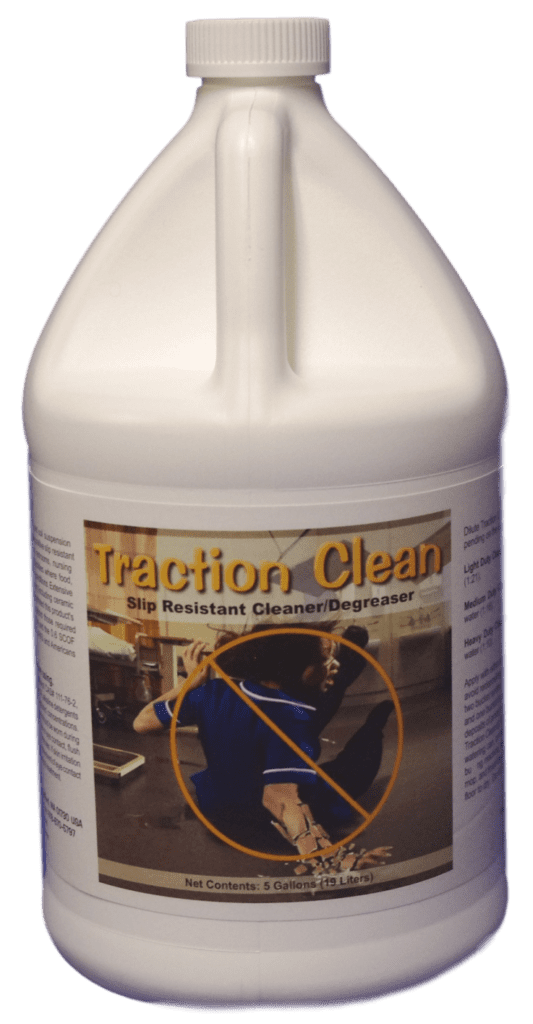
In many kitchens, “all-purpose” cleaners become “barely adequate” cleaners.
Perma’s all-purpose solutions are designed to function across high-touch, high-soil, and food-adjacent surfaces without leaving residues that attract re-soiling.
Used correctly, they:
- Maintain hygienic surfaces between deep clean cycles
- Reduce cross-contamination risk
- Support standardized cleaning protocols across facilities
For hospitality chains and multi-site operators, this consistency is operational gold.
Grease-Strip Solutions: Resetting Surfaces, Not Just Maintaining Them
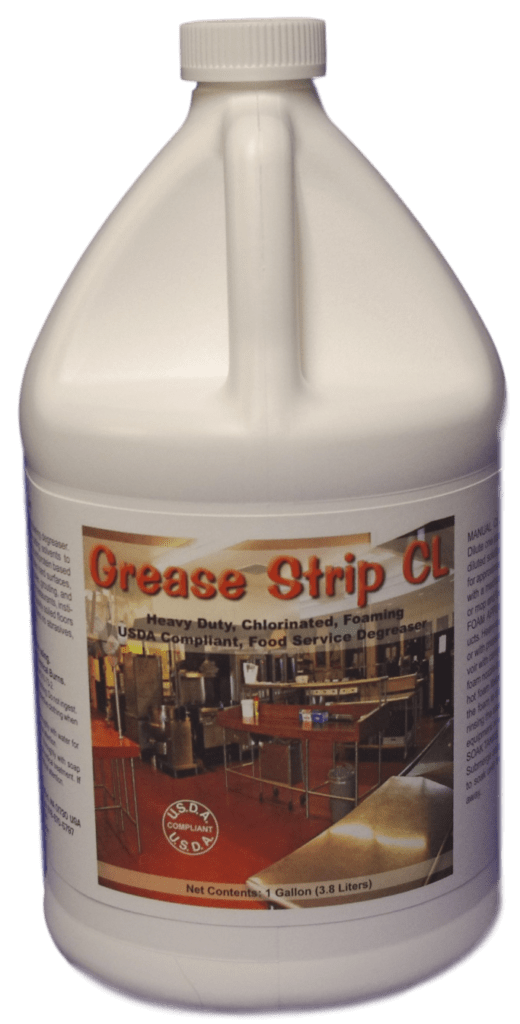
Eventually, kitchens need more than maintenance. They need a reset.
Perma’s grease-strip solutions are engineered for:
- Periodic deep restoration of floors and heavily soiled areas
- Removal of embedded oils that compromise traction
- Preparing surfaces for coatings or sealants
This is especially critical before applying non-slip coatings, where residual grease can undermine adhesion and performance.
Slippery Floors: The Most Expensive “Small Problem” in Hospitality
Slip-and-fall incidents remain one of the top sources of workers’ compensation and liability claims in foodservice.
Water + oil + smooth flooring = predictable disaster.
Perma Non-Slip Floor Coatings Change the Equation
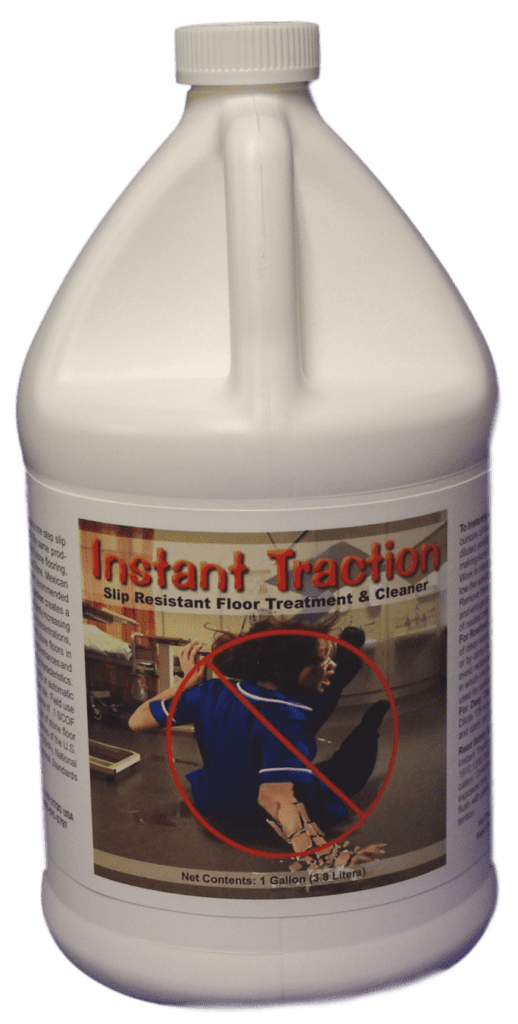
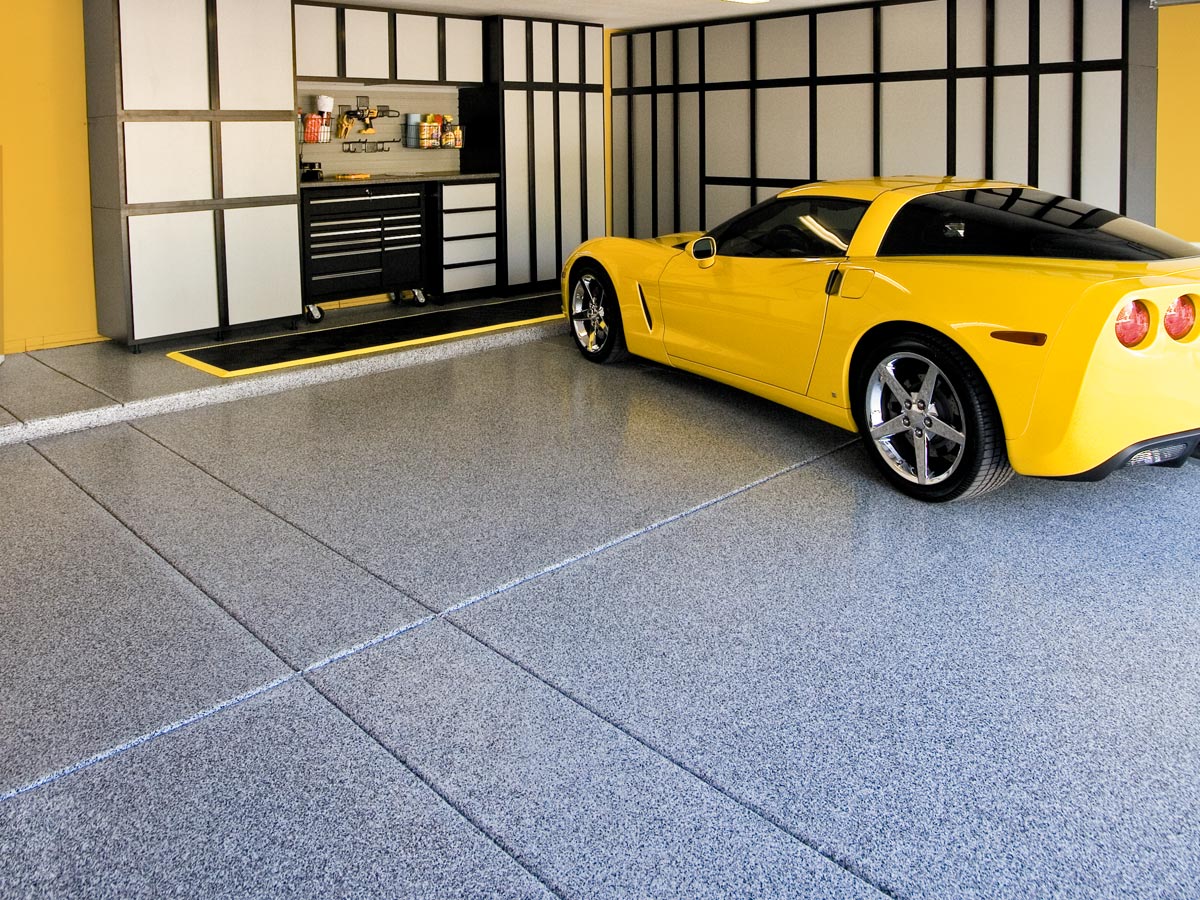
Rather than relying on mats or constant chemical roughening, Perma’s non-slip coatings:
- Create permanent or semi-permanent traction
- Maintain cleanability without harboring grime
- Reduce dependency on aggressive cleaners that damage floors
The result is a surface that is:
- Safer for staff
- Easier to clean
- More stable under inspection
Safety and sanitation stop competing with each other.
Hygiene as a Selling Point for Facility Managers
In modern hospitality, hygiene is no longer invisible infrastructure—it’s a brand asset.
Clean, safe kitchens support:
- Better audit outcomes
- Stronger third-party inspection scores
- Staff retention (nobody likes working on a skating rink)
- Reduced downtime due to injuries or deep clean emergencies
Perma’s cleaner and coating systems allow facility managers to prove control, not just claim it.
Why Systems Beat Single Products
The mistake many facilities make is treating cleaning as a shopping list.
Perma approaches it as a system:
- Degreasers remove contamination
- All-purpose cleaners maintain hygiene
- Grease-strip solutions restore surfaces
- Non-slip coatings lock in safety
Each layer supports the next. Each reduces failure points. This is how kitchens stay functional under pressure.
The Future of Commercial Kitchen Hygiene
Regulatory scrutiny is increasing. Labor is tighter. Expectations are higher.
The kitchens that perform best will be those designed for:
- Ease of cleanability
- Reduced chemical dependency
- Built-in safety features
- Predictable, repeatable outcomes
Perma products don’t just clean kitchens. They engineer reliability into them.
Also Read 💦Foodservice Kitchen Hygiene: Safer Cleaning with Perma
Conclusion: Clean Is a System, Not a Shift
In commercial kitchens, hygiene failures rarely happen all at once. They accumulate quietly—until they show up as injuries, citations, or closures.
By using the right combination of degreasers, cleaners, grease-strip solutions, and non-slip coatings, facility managers can transform kitchens from reactive problem zones into controlled, compliant environments.
Perma helps kitchens stay open, safe, and operational—one surface at a time.
(FAQs)
1. Why is grease so difficult to remove in commercial kitchens?
Heated oils polymerize and bond to surfaces, requiring specialized degreasers to fully break them down.
2. How do non-slip coatings improve kitchen safety?
They create durable traction without trapping dirt, reducing slip risks while remaining easy to clean.
3. Are all-purpose cleaners sufficient for foodservice hygiene?
Only if they are formulated for high-soil, food-adjacent environments and used as part of a system.
4. How often should grease-strip solutions be used?
Periodically, based on traffic and buildup, to restore surfaces and maintain floor performance.
5. Do non-slip floors increase cleaning difficulty?
Properly engineered coatings improve traction without increasing soil retention.
6. How do cleaning systems impact inspection outcomes?
Consistent, residue-free cleaning improves visible cleanliness and reduces hidden contamination.
7. Can better cleaning products reduce labor costs?
Yes. Faster dwell times and fewer repeat cleans reduce labor hours.
8. Why do slippery floors persist even after cleaning?
Residual grease films remain unless chemically removed and mechanically addressed.
9. Are coatings better than mats for kitchen safety?
Coatings provide continuous coverage and eliminate mat movement and sanitation issues.
10. How does kitchen hygiene affect staff retention?
Safer, cleaner environments reduce injuries and improve morale.